Cloud for industry: sovereign, scalable, and resilient
For manufacturing companies, mechanical and plant engineering firms, automotive manufacturers and suppliers, as well as chemical and pharmaceutical companies that are looking to securely process production, development, and quality data, flexibly scale industrial applications, and strengthen their digital sovereignty.
Request consultation now
How do you protect your industrial IT against geopolitical dependencies, cyber risks, and increasing costs of downtime?
Industrial companies are under growing pressure to modernize their IT landscapes while protecting critical know-how. Geopolitical tensions, potential kill-switch scenarios, tariffs, and dependence on global IT and cloud platforms are increasing risks to availability, costs, and data access. At the same time, data volumes from research, production, and connected products are growing – and with them, the requirements for security, computing power, and scalability.
Cloud technologies are well established in the automotive industry, mechanical and plant engineering, and the pharmaceutical and chemical industries. At the same time, the question of which data, applications, and AI projects should be operated under European control is becoming increasingly important. T Cloud Public complements existing cloud landscapes with a sovereign alternative for workloads requiring protection.
The highest standards Your benefits with T Cloud Public
With T Cloud Public from Telekom, you rely on a European industrial cloud that combines technological performance with digital sovereignty. Open cloud technologies, European data centers, and scalable infrastructure help companies reduce dependencies on global hyperscalers, strengthen business continuity, and advance their digital transformation resiliently.
Open technologies such as OpenStack, Terraform and standardized APIs reduce vendor lock-in effects and enable flexible integration into existing IT landscapes.
High-performance cloud services
From compute and storage to containers, databases and AI: T Cloud Public offers you a comprehensive portfolio of powerful cloud services that can be scaled flexibly.
Regulatory frameworks, standards, and certifications
Relevant foundation for regulated applications in pharma and life sciences.
Artificial intelligence in industry
T Cloud Public, together with the Telekom ecosystem, offers a wide range of options for using AI. Use development tools for AI applications, obtain GPU resources on demand, or access sovereign LLMs and additional AI services from our marketplace.
Learn more about AI solutions
Sovereign cloud without replatforming
Not every cloud strategy starts with a migration. Complement your existing IT environments with a sovereign cloud from Europe and launch new data-driven, sensitive, or AI-based projects where control, independence, and data sovereignty matter most.
Your entry point into the sovereign cloud
Strengths that convince Choose a leading cloud from Europe
Independent analysts rate T Cloud Public as a leading European cloud platform. Benefit from a broad service portfolio, modern AI services and an established cloud ecosystem for your digital transformation.
Recognized by analysts and specialist media
Forrester Wave™: Leader in Europe (Q3 2024)
ISG Provider Lens™: Leader in German market
iX-Report 2025: Highest score in test
IT-Awards: Gold "Sovereign cloud“
View all awards
Industry segments Cloud solutions for industry and manufacturing
Industrial companies have very different requirements for their cloud infrastructure. Mechanical and plant engineers need powerful resources for development, simulation, and digital products. Manufacturing companies process large volumes of production, machine, and sensor data for Industry 4.0, smart factories, and AI applications. Automotive companies develop connected vehicles and digital services, while pharmaceutical companies must meet high requirements for quality, documentation, and regulatory compliance.
T Cloud Public supports industrial companies across all sectors with a sovereign European cloud platform for industrial applications, industrial computing, data platforms, and AI.
Manufacturing and mechanical engineering
Cloud solutions for manufacturing and mechanical engineering: flexibly supporting development and production
Mechanical and plant engineering is in the midst of digital transformation. CAD systems, simulations, digital twins, Industry 4.0 applications, and intelligent production processes generate continuously growing volumes of data and require powerful computing resources. At the same time, companies must protect their technological know-how, shorten development cycles, and securely interconnect existing production facilities, robotics, machine controls, and IT systems.
T Cloud Public supports manufacturing companies with a scalable platform for engineering, simulations, and Industry 4.0 applications. CPU, GPU, and bare-metal resources are available on demand and support compute-intensive workloads as well as AI applications and industrial computing. European data centers and open technologies such as OpenStack facilitate the controlled modernization of existing IT landscapes and strengthen digital sovereignty.
Typical requirements
Suitable use cases
High-performance computing power for simulations and development
Protection of development, production, and product data
Integration of existing ERP, MES, and PLM systems
Processing of large volumes of machine and sensor data
Fast development and test environments
Scalable resources for Industry 4.0 applications
Backup and disaster recovery concepts
Integration of edge and cloud systems
HPC and simulation: Flexibly provide computing power for technical calculations and virtual product testing.
CAD and engineering workloads: Use GPU resources for design and development on demand.
Smart factory: Centrally consolidate production, quality, and machine data.
Predictive maintenance: Analyze sensor and machine data for proactive maintenance, condition monitoring, and AI-driven forecasting models.
Industrial data platforms: Securely store and analyze data from manufacturing, development, and service operations.
Digital twins and IoT: Map production facilities and products using cloud-based models and centrally process IoT data from machines and sensors.
Your benefits with T Cloud Public
T Cloud Public combines compute, storage, networking, container, database, and AI services into a flexible platform for industrial workloads. Companies can centrally manage production data, optimize industrial processes, and develop new digital services faster. At the same time, open cloud technologies reduce dependence on proprietary platforms and support flexible long-term IT strategies.
Discuss cloud architecture for manufacturing and mechanical engineering
Process industry
Cloud solutions for the process industry: intelligently analyzing plant and process data
Companies in the chemical, materials, metals, paper, and food industries continuously process large volumes of production, process, energy, and sensor data. At the same time, requirements for automation, resource efficiency, sustainability, and the secure processing of business-critical information are growing. Industry 4.0 concepts connect production facilities, sensors, and intelligent applications, creating the foundation for near-real-time data-driven decisions.
T Cloud Public provides the foundation for scalable data platforms, industrial AI, and modern automation solutions. Cloud-based services complement existing production systems, while time-critical controls can continue to be operated locally or at the edge. This creates an integrated architecture that meaningfully connects local production and scalable cloud resources.
Typical requirements
Suitable use cases
Integration of distributed production sites and facilities
Processing of large volumes of process, machine, and sensor data
High availability of business-critical applications
Protection of formulation, process, and quality data
Scalable data platforms for Industry 4.0
Automation of analysis and production processes
Continuous improvement of energy and resource efficiency
Secure connection of edge, OT, and cloud systems
Process data platforms: Centrally store and intelligently analyze production, quality, and plant data.
Plant monitoring: Continuously analyze sensor and machine data and monitor operational conditions.
Simulation and modeling: Flexibly scale compute-intensive process and materials simulations.
Industrial AI: Develop AI models for quality control, process optimization, and automation.
Energy analytics: Analyze production and consumption data to meet efficiency and sustainability targets.
Backup and disaster recovery: Reliably protect applications and data and reduce recovery times.
Your benefits with T Cloud Public
Compute, storage, database, messaging, and AI services create a powerful foundation for modern industrial applications. Companies can centrally store data, analyze industrial processes, develop intelligent automations, and make production data usable for industrial AI applications. Open cloud technologies support flexible integration of existing systems and reduce dependence on proprietary platforms.
Review cloud requirements for the process industry
Automotive
Cloud solutions for automotive: development, production, and digital vehicle services
The automotive industry is increasingly evolving into a data-driven ecosystem. Software-defined vehicles, connected car services, digital customer applications, and intelligent production processes generate continuously growing volumes of development, vehicle, and user data. At the same time, requirements for data protection, information security, and control over sensitive information are increasing. Particularly for new digital services, AI applications, and data-driven business models, the question of where data is processed and which legal framework applies is becoming increasingly important.
As a European cloud platform, T Cloud Public complements existing cloud, multi-cloud, and on-premises landscapes with a sovereign infrastructure for sensitive and strategic workloads. High-performance compute, GPU, bare-metal, and platform services create the foundation for connected cars, data-driven services, AI applications, and modern development processes, while open technologies facilitate integration of existing systems and reduce long-term dependencies.
Typical requirements
Suitable use cases
Protection of sensitive development, product, and vehicle data
TISAX-aligned security requirements
GDPR-compliant processing of personal data from digital services
High computing power for simulations and digital development
Processing of large volumes of vehicle, sensor, and production data
Scalable cloud infrastructure for connected cars
Integration of plants, suppliers, and development partners in a secure value chain partnership
AI-driven development and quality assurance
High-performance GPU resources for data-intensive applications
Virtual crash tests: Use GPU and HPC resources on demand for complex simulations.
CAD, CAE, and PLM applications: Flexibly provision development and engineering workloads.
Connected cars: Securely store, manage, and analyze vehicle and telemetry data.
Digital vehicle and mobility services: Securely operate and continuously expand customer portals, apps, fleet services, and data-driven additional services.
Software-defined vehicle: Flexibly provide development and test platforms for software-based vehicle functions.
Industrial AI: Develop AI models for quality control, manufacturing optimization, and predictive maintenance.
OTA and connected car platforms: Securely manage vehicle data and continuously develop digital services.
Your benefits with T Cloud Public
T Cloud Public complements existing cloud strategies with a sovereign cloud from Europe for sensitive data, new digital services, and AI-based innovations. Powerful infrastructure and platform services enable new workloads to be deployed quickly without replatforming existing architectures. Open technologies promote technological independence and reduce long-term vendor dependencies.
Plan your automotive cloud architecture with our experts
Pharma and life sciences
Cloud solutions for pharma and life sciences: securely supporting research, development, and quality processes
Pharmaceutical companies and life sciences organizations process large volumes of research, laboratory, production, and quality data. At the same time, requirements for data integrity, documentation, information security, and the controlled development of new drugs and medical devices are increasing. Cloud computing helps companies flexibly provision compute-intensive applications, efficiently analyze research data, and accelerate digital development processes.
T Cloud Public provides a powerful platform for research, development, and data-intensive analytics. Compute, GPU, storage, database, and container resources can be flexibly combined and support scientific simulations as well as AI-driven analyses. Open technologies facilitate the integration of existing laboratory, research, and quality systems into hybrid cloud architectures.
Typical requirements
Suitable use cases
Protection of sensitive research, laboratory, and quality data
Scalable computing power for research and development
High-performance data platforms for analysis and evaluation
Documented access and authorization concepts
Integration of existing laboratory and production systems
High availability of business-critical applications
AI-driven analysis of large data volumes
Backup and recovery procedures for research data
Research and bioinformatics: Flexibly provide compute and storage resources for data-intensive research projects.
HPC and scientific simulations: Scale complex calculations and analyses on demand.
Research and quality data platforms: Centrally manage and analyze data from laboratory, development, and production.
AI in pharma and life sciences: Develop custom models for pattern recognition, drug research, and process optimization.
Monitoring and laboratory applications: Securely store and analyze measurement, laboratory, and environmental data.
Backup and disaster recovery: Reliably protect research and quality data and reduce recovery times.
Your benefits with T Cloud Public
T Cloud Public combines compute, GPU, storage, networking, container, database, big data, and AI services into a powerful cloud platform for pharma and life sciences. Companies can flexibly expand research environments, build data platforms, and operate compute-intensive simulations cost-effectively. European data centers, open cloud technologies, and extensive security certifications create a solid foundation for modern research and development processes.
Research institutions and scientific organizations in Europe that meet the applicable eligibility criteria can obtain T Cloud Public cloud resources at preferential rates through the OCRE framework agreement.
Forschungseinrichtungen und wissenschaftliche Organisationen in Europa können bei Erfüllung der jeweiligen Förderkriterien Cloud-Ressourcen der T Cloud Public vergünstigt über den OCRE-Rahmenvertrag beziehen.
Review cloud requirements for pharma and life sciences
Your path to the secure cloud In industry
Depending on your requirements and cloud expertise, we offer different paths into our cloud: from independent self-service and turnkey cloud-based solutions to the analysis and strategic realignment of your IT and cloud infrastructure.
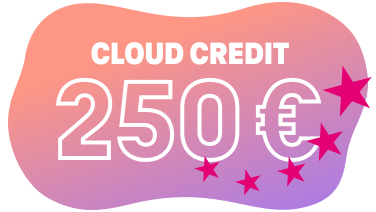
Get started now – with 250 € cloud credit
Provide your cloud resources flexibly and easily via self-service. With 250 € cloud credit, you can get started right away, implement initial projects and test our cloud.
Register now
Obtain complete solutions from our marketplace
Expand your IT flexibly with sovereign cloud-based solutions for industry – from managed backup & disaster recovery solutions and simulation platforms to automation and LLM services.
Discover marketplace now
Cloud assessment and strategy for your sovereign cloud transformation
Introducing an industry cloud begins with a thorough analysis of your applications, production processes, and IT landscapes. Together, we develop a cloud strategy that combines digital sovereignty, security, and cost-efficiency, and supports your Industry 4.0 strategy in the long term.
1. Assess requirements and criticality
Capture applications, data, locations, interfaces, and technical dependencies. Evaluate protection requirements, latency, recovery time objectives, regulatory relevance, and the impact of potential outages.
2. Develop target architecture
Define which components will be operated in the public cloud, private cloud, at the edge, or in existing data centers. Plan networking, identities, encryption, data storage, logging, and availability zones.
3. Pilot and migrate in a controlled manner
Select a technically isolated workload. Test performance, security, interfaces, costs, backup, and recovery. Document findings and then prioritize additional applications.
4. Operate securely and optimize continuously
Monitor resources, costs, capacities, security events, and availability. Integrate patches, permissions, backups, disaster recovery tests, and regulatory assessments into structured operational processes.
Request individual consultation now
References Cloud infrastructure in practical use for industry and manufacturing
Companies are already using T Cloud Public for simulations, AI applications, digital platforms, and the secure processing of sensitive data.
ReferenceDynamic simulations with scalable cloud computing power
CADFEM uses T Cloud Public for high-performance simulations of complex physical processes. Scalable compute resources via Elastic Cloud Server replace rigid on-premises hardware, reduce administrative overhead, and enable cost-efficient, project-accurate billing – used across locations in Germany, Austria, and Switzerland.
To the CADFEM reference
ReferenceAnti-counterfeiting on sovereign cloud infrastructure
Bosch subsidiary Bosch Secure Authentication operates its product protection solution Origify on T Cloud Public. Origify identifies genuine products based on unique surface structures via smartphone scan – without any labeling required. Since launching on T Cloud Public, Origify has recorded zero percent downtime.
To the Bosch reference
ReferenceIndustrial metaverse and AI on sovereign cloud infrastructure
The EDAG Group operates its industrial metaverse platform metys on T Cloud Public and uses the Industrial AI Cloud for AI workloads. The platform connects virtual product development and physical production into a digital ecosystem – sovereign, scalable, and hosted on European soil.
To the EDAG Group reference
ReferenceEuropean Space Agency (ESA)
The Sentinel family of satellites is Europe's eye in space. They observe the Earth continuously and collect enormous volumes of data. This requires powerful storage and compute resources from T Cloud Public.
To the ESA reference
Find the right cloud solution for your company
Whether mechanical engineering, manufacturing, automotive, or pharma – together we develop a cloud strategy that securely operates your applications, makes industrial data usable, and advances your IT into the future.
Schedule a non-binding consultation now
FAQ – Frequently asked questions about cloud for industry
Does T Cloud Public offer ERP, MES, PLM, or LIMS software?
No. T Cloud Public provides a public cloud platform with infrastructure and platform services. These include compute, storage, networking, containers, Kubernetes, databases, big data, AI, and backup services, among others. ERP, MES, PLM, LIMS, or QMS applications can be operated on this cloud infrastructure but are provided and managed by the respective company or a software partner.
Which industrial applications are suitable for the public cloud?
Suitable applications include industrial data platforms, simulations, HPC workloads, development and test environments, IoT applications, AI models, digital twins, and backup and disaster recovery solutions. Whether an application should be operated in a public cloud depends on its protection requirements, latency, availability, data volume, and dependencies on existing production and OT systems.
Which applications should not be migrated to the public cloud without careful consideration?
Safety-critical controls, real-time systems, and applications tightly coupled to production facilities require individual assessment. Depending on the use case, a hybrid cloud architecture may be more appropriate, in which time-critical systems are operated locally or at the edge while data platforms, analytics applications, or AI workloads use the public cloud.
Can T Cloud Public replace existing ERP, MES, or laboratory systems?
No. T Cloud Public can provide the technical infrastructure for such systems. Whether an existing application is cloud-ready must be assessed based on its architecture, vendor approval, licensing, interfaces, and operational requirements.
When does a hybrid cloud make sense for industrial companies?
A hybrid cloud is appropriate when production facilities, OT systems, or safety-critical applications must be operated locally, while development environments, data platforms, or industrial AI applications run flexibly in the public cloud. This allows existing investments to be leveraged while integrating modern cloud technologies.
How can production and OT systems be securely connected to a cloud?
Production and OT systems should be connected via segmented networks, controlled interfaces, and clearly defined data flows. Identity management, encryption, logging, and restrictive access controls help securely connect production networks and cloud applications.
Does a public cloud automatically make industrial applications scalable?
No. The cloud provides additional compute, storage, and network resources flexibly. However, an application must be technically designed to efficiently use additional resources. Only the combination of cloud architecture and application design enables high scalability.
How are highly available industrial applications built?
High availability is achieved through appropriate architecture. Applications can be distributed across multiple availability zones, secured by load balancers, and automatically scaled as needed. In addition, backup and disaster recovery concepts help minimize downtime and data loss.
What is the difference between backup and disaster recovery?
Backups are used to restore data. Disaster recovery additionally encompasses the organizational and technical measures used to restore complete applications or production processes within defined recovery time objectives following a major outage.
Does T Cloud Public automatically make an industrial company NIS2-compliant?
No. The provider's certifications and security services can support implementation and documentation efforts. The affected company remains responsible for risk management, governance, incident processes, supply chain security, business continuity, and the secure configuration of its own systems, among other things.
Does TISAX Level 3 mean that all automotive applications operated on the platform are TISAX-compliant?
No. The TISAX certificate describes the assessed scope of the provider. The automotive customer must still assess their own scope, processes, access controls, applications, data flows, and vendor management. The provider's certificate is one component of the overall assessment.
Can GxP-relevant pharmaceutical applications be operated on T Cloud Public?
In principle, a suitable cloud infrastructure can be part of a GxP-regulated overall system. Prerequisites include, among others, a supplier assessment, infrastructure qualification, application validation, documented processes, and appropriate measures for data integrity, backup, and recovery. Responsibility for validation remains with the regulated company.
What responsibility does T Cloud Public assume, and what remains with the customer?
T Cloud Public provides the agreed infrastructure and the respective platform services. For IaaS workloads, the customer is responsible for operating systems, applications, patches, user permissions, network configurations, monitoring, and the use of backup and security services, among other things. For managed or platform services, the division of responsibilities shifts but must be reviewed specifically for each service.
How can industrial data be used for AI applications?
Production, quality, machine, and sensor data can be consolidated on a cloud data platform and used for analytics, forecasting, or AI applications. T Cloud Public provides compute, GPU, storage, and AI resources for this purpose. The development, training, and technical validation of models is carried out by the company or a specialized partner. High-performance GPU resources are available for compute-intensive AI workloads and can be used, for example, for NVIDIA-based training and inference scenarios.
How can vendor lock-in be minimized?
Open technologies such as OpenStack, Kubernetes, containers, and standardized APIs facilitate portable cloud architectures and reduce dependence on individual vendors. In addition, documented interfaces, infrastructure as code, and tested exit strategies support a future provider change.
How can cloud costs be controlled in industrial projects?
Cloud costs depend on factors including computing power, storage, data transfer, and platform services used. Transparent budgets, tagging, monitoring, automated scaling, and regular reviews help use resources efficiently and continuously optimize costs.
Schedule your non-binding consultation now
T Cloud Public Community
This is where users, developers and product owners meet to help each other, share knowledge and discuss.
Discover now
Free expert hotline
Our certified cloud experts provide you with personal service free of charge.