

ReferenceCRM from the sovereign cloud
JustRelate delivers its CRM solution from T Cloud Public – GDPR-compliant, hosted in German data centers, with a compelling price-performance ratio and growing customer trust.
For retailers, retail groups, logistics service providers, and platform operators looking to run e-commerce, inventory management, supply chains, and data-driven applications securely, flexibly, and efficiently.
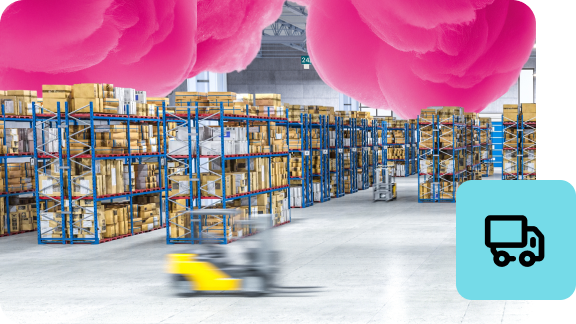
Retail and logistics are in the midst of digital transformation: product data is increasingly becoming personal profiles and business-critical process data. E-commerce, omnichannel concepts, digital supply chains, robotics-assisted warehouse processes, and AI applications continuously generate large volumes of data that require protection. At the same time, customers expect fast response times, reliable digital services, and confidential real-time data processing. Seasonal peak loads, rising cyber risks, and legacy IT infrastructures make it increasingly difficult to operate modern applications securely and cost-effectively.
Cloud computing has long been standard practice in retail and logistics. However, as volumes of personal and business-critical data grow, so do requirements for transparency, compliance, and digital sovereignty. European cloud solutions help organizations meet these requirements.
With T Cloud Public, you rely on a sovereign public cloud for retail and logistics. European data centers, open cloud technologies, and a high-performance cloud infrastructure help you develop e-commerce platforms, inventory management, supply chain processes, and digital business models securely, flexibly, and in a future-proof way.

T Cloud Public is subject solely to EU jurisdiction (no US CLOUD Act) and is operated in highly secure twin-core data centers in Germany and Europe. You retain full control and data sovereignty.

Certified cloud infrastructures (including BSI C5 Type 2) support the secure processing of sensitive data. High security standards and controlled access provide a resilient foundation for critical applications and infrastructures (KRITIS).

From compute and storage to containers, databases and AI: T Cloud Public offers you a comprehensive portfolio of powerful cloud services that can be scaled flexibly.

Multiple availability zones, resilient cloud architectures, and backup and recovery solutions support the reliable operation of digital applications and the implementation of business continuity concepts.

T Cloud Public is based on OpenStack and supports standardized interfaces, container technologies, and multi-cloud architectures. This simplifies the integration of existing IT infrastructures and reduces dependency on proprietary platforms.

From initial analysis to secure operations, we support you in developing a high-performance cloud solution. Together, we create the foundation for efficient processes, sustainable growth, and a future-proof digital infrastructure.
Unabhängige Analysten bewerten die T Cloud Public als führende europäische Cloud-Plattform. Profitieren Sie von einem breiten Serviceportfolio, modernen KI-Services und einem etablierten Cloud-Ökosystem für Ihre digitale Transformation.
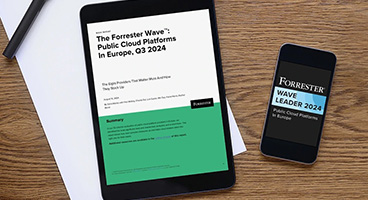
Independent analysts rate T Cloud Public as a leading European cloud platform. Benefit from a broad service portfolio, modern AI services and an established cloud ecosystem for your digital transformation.

T Cloud Public extends existing hyperscaler, multi-cloud, and on-premises environments with a sovereign cloud from Europe. With high-performance infrastructure and platform services, organizations retain control over sensitive data, reduce dependencies, and create the foundation for secure digital innovation and the protection of business-critical and mission-critical applications.

Retail is increasingly becoming a data-driven business. E-commerce, omnichannel strategies, digital customer services, and connected inventory management systems generate large volumes of data that must be processed quickly and securely. At the same time, customers expect always-on applications, fast response times, and a consistent shopping experience across all sales channels. Cloud computing helps retailers manage digital processes efficiently and deploy new applications with flexibility.
With T Cloud Public, retailers build a high-performance cloud infrastructure for e-commerce, omnichannel, and data-driven business models. Compute, storage, network, database, and container resources can be scaled on demand. Open cloud technologies, European data centers, and hybrid cloud architectures help organizations evolve existing IT infrastructures step by step and enable sustainable growth.
Typical requirements | Relevant use cases |
|---|---|
|
|
T Cloud Public provides scalable compute, storage, network, database, container, and analytics services resiliently across European cloud regions. Auto scaling and load balancing support applications during fluctuating workloads.
Personal employee and customer data can be processed in compliance with GDPR. Comprehensive security measures and certifications help food retailers meet KRITIS and NIS-2 requirements.
Open interfaces simplify the integration of existing systems and protect your independence. This enables cloud solutions for e-commerce, omnichannel, and digital retail processes – without replacing existing inventory management or ERP systems.

Logistics companies connect warehouses, vehicles, transfer points, supply chains, and customers and partners through numerous digital applications. At the same time, data volumes, transactions, and requirements for availability, transparency, and speed continue to rise. Large logistics centers may also be subject to KRITIS and NIS-2 requirements as critical infrastructure, which raises the bar for resilience, availability, and security.
Cloud computing helps logistics companies process data in real time, manage processes efficiently, and adapt applications flexibly to new requirements.
With T Cloud Public, logistics companies build a high-performance cloud infrastructure for modern supply chain processes. Compute, storage, network, container, and database resources can be provisioned flexibly and support cloud-based applications, IoT platforms, and data-intensive analytics. Open cloud technologies simplify the integration of existing IT infrastructures and partner solutions.
Typical requirements | Relevant use cases |
|---|---|
|
|
T Cloud Public provides compute power, storage, networks, databases, containers, and messaging services flexibly on demand. Organizations can centrally manage data, scale applications efficiently, and develop new digital services faster. European data centers and open technologies provide a secure foundation for modern logistics platforms and digital supply chain applications.
Comprehensive security measures and relevant certifications also support organizations in meeting regulatory requirements such as GDPR, NIS-2, and KRITIS.

Software vendors for retail and logistics are increasingly developing cloud-based platforms for CRM, ERP, process management, analytics, process mining, and AI. At the same time, customers are demanding greater data sovereignty, transparency, and control over their data. Modern software solutions therefore need to scale flexibly, integrate securely, and operate independently of any single cloud provider.
With T Cloud Public, software providers build a sovereign cloud foundation for digital platforms and SaaS offerings. Containerized architectures, Kubernetes, open APIs, and standardized interfaces enable the delivery of cloud- and platform-agnostic services. Existing hyperscaler strategies can be selectively extended with a sovereign cloud from Europe, making it easy to meet growing customer demands for data sovereignty.
Typical requirements | Relevant use cases |
|---|---|
|
|
T Cloud Public extends existing cloud environments with a sovereign cloud from Europe. Software providers can run sensitive data, AI services, and new digital platforms on a European infrastructure while continuing to use their existing hyperscaler environments. The result: modern SaaS offerings that combine data sovereignty, innovation, and technological independence.
Discover current market data, customer examples and the most important success factors for using sovereign cloud solutions.
Depending on your requirements and cloud expertise, we offer several paths into our cloud: from self-service to fully managed cloud solutions to a comprehensive analysis and strategic realignment of your IT and cloud infrastructure. Find the right entry point into our cloud.
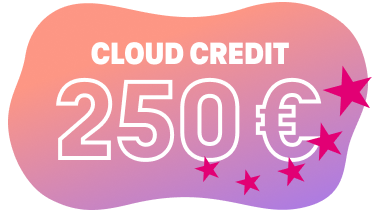
Provide your cloud resources flexibly and easily via self-service. With 250 € starting credit, you can get started right away, implement initial projects and test our cloud.
Extend your IT flexibly with sovereign, cloud-based solutions for retail and logistics – from managed backup & disaster recovery solutions and identity & access management to modern automation and LLM services.
Every cloud solution begins with a thorough analysis of your applications, data, IT infrastructure, and business requirements. Together, we develop an architecture that enables organizations to manage workloads efficiently, integrate existing systems, and embed cloud services securely into existing processes. This creates a scalable foundation for digital transformation in retail and logistics.
Capture applications, data assets, and interfaces, determine criticality, and prioritize suitable cloud workloads.
Plan the integration of the sovereign cloud into existing architectures, including network, identity management, data storage, and availability requirements.
Select a defined workload, test security, performance, and interfaces, and expand the migration in a controlled manner.
Monitor resources, availability, costs, and security events, and regularly adapt the architecture to new requirements.
Organizations already use T Cloud Public for sensitive data, digital platforms, and business-critical applications with high requirements for data sovereignty and security.
JustRelate delivers its CRM solution from T Cloud Public – GDPR-compliant, hosted in German data centers, with a compelling price-performance ratio and growing customer trust.

Bosch Secure Authentication operates its product protection solution Origify on T Cloud Public. Origify identifies genuine products via smartphone scan based on unique surface structures – with no labeling required.

brodos.net operates its omnichannel platform for over 1,000 local specialty retailers on T Cloud Public – with 40% more performance, 99.95% guaranteed availability, and German data center security.

Randstad processes personal data of clients, candidates, and employees GDPR-compliant on T Cloud Public – in German data centers, shielded from US jurisdiction, on scalable bare metal infrastructure.

Creditreform uses T Cloud Public for database-based applications as well as development and test environments. Scalable cloud solutions help the company deploy applications flexibly and implement regulatory requirements efficiently.
Whether retail, logistics, or omnichannel – together we develop a cloud-based architecture that operates applications securely, uses resources efficiently, and adapts flexibly to new requirements. This creates the foundation for greater efficiency, flexibility, and long-term growth.
No. T Cloud Public is a public cloud platform providing infrastructure and platform services, including compute, storage, networks, containers, databases, big data, AI, and backup and recovery services. Retail and logistics companies can run their own applications or partner software solutions on this infrastructure. However, T Cloud Public does not replace inventory management, shop, warehouse management, or transportation management software. Available all-in-one solutions on T Cloud Public can be found in the marketplace or identified with the help of expert support.
Suitable applications include data and analytics platforms, test and development environments, digital customer-facing applications, integration services, and cloud-based applications with fluctuating workloads. Whether a specific application should be migrated depends on its protection requirements, technical architecture, and dependencies on existing systems.
Modern cloud technologies make it possible to provision resources flexibly and scale applications efficiently during seasonal peak loads. This allows retail organizations to benefit from high availability and better utilization of their infrastructure.
Possible workloads include data platforms, IoT backends, interface and messaging services, analytics applications, development environments, and backup and recovery systems.
Time-critical applications or those tightly coupled to local systems require separate evaluation. A hybrid architecture may be more appropriate in such cases.
A hybrid cloud is suitable when established core systems are to remain on-premises or in a private cloud for the time being, while new applications, data analytics, or test environments are operated in the public cloud. Key success factors include clearly defined interfaces, secure network connections, and unified identity and access management.
This integrated architecture connects existing systems with modern cloud services and provides greater flexibility without requiring existing investments to be replaced.
A hybrid architecture can connect local warehouse, site, or edge systems with central cloud services. Data can be captured and processed on-site, while central analytics, platform services, or backups run in the cloud. Which components are operated where should be determined based on latency, availability, protection requirements, and data volume.
A cloud data platform can consolidate data from different applications and business units, creating a shared foundation for analytics, reporting, forecasting, and AI applications. T Cloud Public provides database, data warehouse, storage, and compute services for this purpose. Business modeling and analysis must be carried out by the organization or a solution partner.
Transport, location, status, and sensor data can be centrally captured, stored, and processed, enabling optimized processes across the entire supply chain. Applications and partners can be integrated via standardized interfaces, while logistics organizations have access to up-to-date information in real time at all times.
Cloud security encompasses the protection of identities, networks, data, applications, and interfaces. The cloud provider protects the underlying infrastructure. The customer remains responsible for user permissions, application security, data classification, and the secure configuration of their resources. This model is known as shared responsibility.
Disaster recovery for retail and logistics encompasses technical and organizational measures that enable applications and data to be restored following an outage. These include backups, data replication, redundant resources, and documented recovery procedures. T Cloud Public offers cloud backup and recovery as well as storage disaster recovery. In addition, resources can be distributed across multiple availability zones and data centers in Germany and the Netherlands. This increases reliability and supports business-critical applications in retail and logistics.
Cloud resources can be scaled up or down based on actual utilization. This means organizations do not need to permanently provision capacity for infrequent peaks. A prerequisite is that the application is technically designed for horizontal or vertical scaling. The cloud alone does not automatically make a non-scalable application elastic.
Open interfaces, standardized container technologies, documented data formats, and infrastructure-as-code facilitate portability. T Cloud Public is based on OpenStack and offers standardized APIs. Organizations should nonetheless define before migration how applications, configurations, and data can be exported and transferred to a different environment if needed.
Costs depend on factors including compute power, storage, data transfer, availability, and additional platform services used. Budgets, resource quotas, monitoring, and automated scaling rules create transparency. In addition to pure infrastructure costs, operations, maintenance, security measures, backup, and recovery should also be factored in. Optimized resource utilization improves efficiency and creates the foundation for sustainable growth – even with complex supply chains or globally distributed locations.
T Cloud Public Community
This is where users, developers and product owners meet to help each other, share knowledge and discuss.
Free expert hotline
Our certified cloud experts provide you with personal service free of charge.
0800 3304477 (from Germany)
+800 33044770 (from abroad)
24 hours a day, seven days a week
Write an E-Mail
Our customer service is available free of charge via E-Mail
AIssistant Cloudia
Our AI-powered search helps with your cloud needs.