Cloud for the energy sector: secure, resilient and sovereign
For energy suppliers, municipal utilities, grid operators and companies in the water, wastewater and waste management sector who want to modernize their digital infrastructure, operate critical applications securely and process data efficiently.
Request consultation now
Modernize your energy IT for more protection, resilience and security of supply
The energy sector is in the midst of a profound digital transformation. Renewable energies, smart grids, intelligent metering systems, decentralized generation and AI are changing processes along the entire value chain. Energy suppliers, grid operators and municipal utilities must process growing volumes of data, deploy new digital applications and continuously develop their infrastructure. At the same time, requirements for cyber resilience, compliance and the protection of critical infrastructures (KRITIS) are increasing. We support you in setting up your IT in a legally compliant and independent manner.
The highest standards Your benefits with T Cloud Public
As an ICT company that is itself KRITIS-regulated, we understand the high requirements for security, compliance and resilience. We personally accompany you through your cloud transformation and offer with T Cloud Public a cost-efficient, resilient and comprehensively certified cloud solution for the energy sector.
Independent data storage in Germany
Your data is processed in Germany and Europe under EU law (without the US CLOUD Act). Open standards facilitate the integration of existing systems and reduce the risk of vendor lock-in.
Resilience and fault tolerance
Increase the resilience and fault tolerance of your IT with high-availability infrastructures and backup and disaster recovery solutions that can be deployed cost-efficiently and at the touch of a button.
Verified security and compliance for KRITIS
BSI C5 Type 2 and numerous ISO certifications demonstrate high standards for information security, data protection and business continuity for the reliable operation of critical applications.
Sustainability in the data center
Operations take place in energy-efficient data centers using renewable energy. Our sustainability dashboard provides transparency and helps you track your sustainability goals.
Flexible cloud solutions for every requirement
From compute and storage to containers, databases and AI: T Cloud Public offers you a comprehensive portfolio of powerful cloud services that can be scaled flexibly.
Personal contacts and managed services
Benefit from experienced experts who know your regulatory requirements and personally accompany you through your sovereign cloud transformation.
Our certifications and security standards
Support for NIS2 and KRITIS
GDPR-compliant data storage in Germany and Europe
Zero trust architecture
Geo-redundant cloud regions with high-availability failover concepts
Support for trustworthy AI applications (AI Act)
Encrypted data transmission
Digital sovereignty through operations in European data centers
BSI C5 Type 2 attestation
Support for data portability and data sovereignty (Data Act)
ISO/IEC 27001 certified
To our certificates and attestationsTo our security standards
Strengths that convince Choose a leading cloud from Europe
Independent analysts rate T Cloud Public as a leading European cloud platform. Benefit from a broad service portfolio, modern AI services and an established cloud ecosystem for your digital transformation.
Recognized by analysts and specialist media
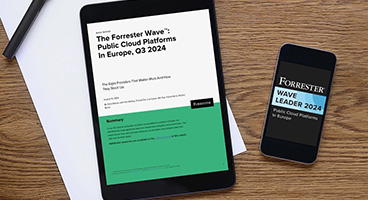
Forrester Wave™: Leader in Europe (Q3 2024)
ISG Provider Lens™: Leader in German market
iX-Report 2025: Highest score in test
IT-Awards: Gold "Sovereign cloud“
View all awards
Industry segments Cloud computing for the energy sector – solutions for different players
Cloud solution requirements differ depending on the role in the energy system. Energy suppliers and municipal utilities modernize existing applications and digital processes. Grid operators need resilient cloud infrastructures for the secure operation of critical applications and the processing of large volumes of data. Energy IT companies and platform providers rely on scalable cloud technologies to develop and deploy new applications efficiently.
T Cloud Public supports companies in the energy sector with a secure, sovereign and powerful cloud infrastructure – from data platforms and smart grids to AI applications and modern platform and software solutions for digital transformation.
Energy suppliers and municipal utilities
Cloud solutions for energy suppliers and municipal utilities
A modern cloud for energy suppliers and municipal utilities must reliably connect existing applications, data platforms and digital processes. At the same time, requirements for cyber resilience, sustainability, compliance and the secure processing of large volumes of data are growing. Cloud computing supports companies in modernizing their digital infrastructure step by step and deploying new applications flexibly.
With T Cloud Public, energy suppliers and municipal utilities can develop their cloud architecture in a controlled manner. Open cloud technologies, European data centers and scalable resources create the foundation for implementing innovations more quickly while ensuring security and digital sovereignty.
Typical requirements
Suitable use cases
Compliance mit den Vorgaben kritischer Infrastrukturen (KRITIS)
Modernisierung gewachsener IT- und Anwendungssysteme
hohe Verfügbarkeit geschäftskritischer Anwendungen
sichere Verarbeitung großer Energie-, Verbrauchs- und Messdaten
skalierbare Cloud-Ressourcen für neue digitale Anwendungen und Prozesse
Integration bestehender On-Premises- und Private-Cloud-Systeme
flexible Ressourcen für Lastspitzen und neue digitale Angebote
nachvollziehbare Datenhaltung und Verantwortlichkeiten
Kostenkontrolle bei wachsendem IT- und Investitionsbedarf
Compliance with critical infrastructure (KRITIS) requirements
Modernization of legacy IT and application systems
High availability of business-critical applications
Secure processing of large volumes of energy, consumption and metering data
Scalable cloud resources for new digital applications and processes
Integration of existing on-premises and private cloud systems
Flexible resources for peak loads and new digital offerings
Traceable data storage and clear accountability
Cost control with growing IT and investment requirements
Business Continuity und Cyberresilienz: Backup-, Recovery- und Wiederanlaufkonzepte für geschäftskritische Anwendungen, Kundenplattformen und energiewirtschaftliche Systeme aufbauen
Datenplattformen und Smart Meter: Verbrauchs-, Erzeugungs-, Einspeise- und Messdaten skalierbar speichern, verarbeiten und für Analysen nutzbar machen
KI und Prognosen: Last-, Erzeugungs- und Verbrauchsprognosen sowie Predictive-Maintenance- und Automatisierungsanwendungen auf einer skalierbaren Plattform betreiben
Business continuity and cyber resilience: Build backup, recovery and restart concepts for business-critical applications, customer platforms and energy industry systems
Data platforms and smart metering: Store, process and make scalable use of consumption, generation, feed-in and metering data for analytics
AI and forecasting: Operate load, generation and consumption forecasts as well as predictive maintenance and automation applications on a scalable platform
Your benefits with T Cloud Public
T Cloud Public combines scalable infrastructure and platform services with European data centers, open cloud technologies and a powerful cloud infrastructure for the energy sector. Energy suppliers and municipal utilities can modernize existing applications in a controlled manner, build new data platforms and develop digital processes efficiently. This creates cloud solutions that combine innovation, security and cost efficiency.
Request consultation for energy suppliers now
Grid operators and critical infrastructures
Cloud solutions for grid operators and critical infrastructures
Grid operators face the challenge of building a secure, resilient and future-proof digital infrastructure for grid operations. Smart grids, intelligent metering systems, decentralized energy generation and increasing volumes of data raise the requirements for availability, cyber resilience and the secure processing of grid data. Cloud computing supports grid operators in providing data platforms, analytics applications and digital processes efficiently, without losing sight of existing security and protection concepts.
With T Cloud Public, grid operators develop a scalable cloud infrastructure for selected business-critical applications. European data centers, geo-redundant resources and open cloud technologies create the foundation for resilient cloud solutions and support the KRITIS-compliant modernization of existing IT landscapes.
Typical requirements
Suitable use cases
Resilient architectures for critical applications
Secure separation and controlled connection of IT and OT
Geo-redundant backup and recovery structures
Scalable data platforms for grid and operational data
Traceable access and permission concepts
Continuous monitoring and logging
Support for NIS2-, KRITIS- and B3S-relevant requirements
Scalable cloud resources for grid analyses and smart grids
Secure processing of large volumes of energy, grid and metering data
Business continuity and cyber resilience for critical infrastructures: Backup, recovery and resilience strategies for grid operations, control centers, energy platforms and business-critical applications.
Smart grids and grid modernization: Process grid, consumption, feed-in and smart meter data and make it usable for grid planning, simulations and bottleneck analyses.
Condition monitoring and predictive maintenance: Analyze operational and sensor data to identify maintenance needs earlier and reduce unplanned outages.
Your benefits with T Cloud Public
T Cloud Public supports grid operators with a powerful cloud infrastructure for resilient operations and restart concepts. Geo-redundant resources, European data processing and comprehensive security standards create a solid foundation for data platforms, analytics applications and business-critical processes. This allows companies to advance their digital transformation in a controlled manner and adapt cloud solutions flexibly to new requirements in the energy sector.
Discuss cloud architecture with experts
Energy IT, smart energy and platform providers
Cloud solution for energy IT, smart energy and platform providers
Software and platform providers in the energy sector continuously develop new digital applications for energy suppliers, grid operators and municipal utilities. At the same time, requirements for scalability, security, integration and short development cycles are increasing. Cloud technologies and open platform services create the foundation for developing applications efficiently, deploying them in an automated manner and adapting them flexibly to new market requirements.
T Cloud Public provides an open cloud infrastructure with scalable platform services, containers, Kubernetes, databases and AI services. This creates powerful cloud solutions for smart energy, data-intensive applications and digital platforms – without building dependencies on proprietary technologies.
Typical requirements
Suitable use cases
Scalable infrastructure for SaaS and platform offerings
Efficient deployment of digital applications and processes
Automated development and deployment processes
Container and Kubernetes environments
APIs and standardized interfaces
Flexible database, analytics and AI services
Compliance with critical infrastructure (KRITIS) requirements
Multi-tenancy and secure customer separation
Portability and avoidance of vendor dependencies (vendor lock-in)
Energy and grid data platforms: Securely capture, process and provide data from various sources for analytics, forecasts and digital applications
Software as a service: Deploy energy industry applications in a multi-tenant, secure and flexible manner via a scalable cloud infrastructure.
AI and intelligent automation: Develop and operate forecasts, predictive maintenance, grid calculations, energy trading and data-driven decision processes on a powerful cloud platform.
Your benefits with T Cloud Public
As a cloud for smart energy providers, T Cloud Public supports the scalable deployment of data-intensive applications. The broad service portfolio enables the modern delivery of cloud-based solutions. Open technologies facilitate the automation, integration and portability of platforms and software solutions.
Request technical consultation
White paper: The European Way of Cloud
Discover current market data, customer examples and the most important success factors for using sovereign cloud solutions.
Download white paper European Way of Cloud
Your path to the secure cloud For the energy sector
Depending on your requirements and cloud expertise, we offer you various ways into our cloud: from independent self-service to cloud-based complete solutions to the analysis and strategic realignment of your IT and cloud infrastructure. Find the right entry point into our cloud.
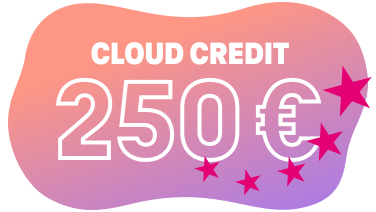
Get started now – with 250 € cloud credit
Deploy your cloud resources flexibly and easily via self-service. With 250 € in cloud credit, you can get started right away, implement first projects and test our cloud – with no minimum term and no hidden costs.
Register now
Obtain complete solutions from our marketplace
Expand your IT flexibly with sovereign cloud-based solutions for the energy sector – including managed enterprise backup and disaster recovery solutions, the sovereign deployment of leading automation solutions such as UiPath or LLM services, and much more.
Discover marketplace now
Cloud assessment and strategy for your sovereign cloud transformation
Every cloud transformation in the energy sector has different requirements. The decisive factors are protection requirements, criticality, regulatory specifications and the dependencies between IT and OT systems. Together we develop a cloud architecture that combines security, resilience and cost efficiency – from the initial analysis to long-term operations.
1. Analyze applications and data
Together we capture applications, data assets and existing IT landscapes. We then assess protection requirements, criticality and dependencies between IT and OT systems and identify suitable workloads for a secure cloud migration.
2. Develop target architecture
Based on the assessment, we integrate T Cloud Public into your current IT landscape and also provide support for complex multi-cloud scenarios. We take into account regulatory requirements, security concepts, data flows, availability and future scaling requirements of the energy sector.
3. Implement pilot project securely
A clearly defined workload makes it possible to test cloud technologies, interfaces, security measures and backup and recovery concepts under real conditions. Findings from the pilot project form the basis for further migration.
4. Continuously optimize the cloud
After implementation, we continuously monitor resources, availability, security and costs. New cloud services, data platforms, AI applications and automation can be integrated step by step, so that your cloud infrastructure remains powerful, resilient and future-proof in the long term.
Request individual consultation now
References How companies use T Cloud Public for the energy sector
Our references show how energy suppliers, municipal utilities, grid operators and software providers use T Cloud Public to build cloud infrastructures, operate data platforms, deploy critical applications resiliently and advance the digital transformation of the energy sector.
ReferenCEDigital infrastructure for the energy transition
The German Energy Agency (dena) uses T Cloud Public as the technological foundation for digital projects related to the energy transition. The cloud infrastructure supports the secure operation of data-intensive applications and creates a scalable basis for innovative platforms and digital services.
To the reference dena
ReferenCEIntelligent grid planning from the cloud
envelio operates its Intelligent Grid Platform on T Cloud Public. The cloud infrastructure provides scalable resources for grid analyses, smart grids and data-intensive applications. Customers benefit from flexible clusters as well as complementary backup and disaster recovery solutions.
To the reference envelio
ReferenCECloud services for the energy and municipal sector
rku.it supports companies in the energy and municipal sector with modern cloud services based on T Cloud Public. The cloud platform creates a secure and scalable foundation for the operation of business-critical applications and the digital transformation of municipal companies.
To the reference rku.it
ReferenCEEnergy management software securely from the cloud
NZR provides its energy management software on T Cloud Public, enabling companies to centrally capture, analyze and optimize energy consumption – without operating their own cloud infrastructure.
To the reference NZR
Find the right cloud solution for your company
Whether you are an energy supplier, municipal utility or grid operator – we support you in developing a secure, resilient and sovereign cloud strategy for your specific requirements.
Schedule a non-binding consultation now
FAQ – Frequently asked questions about cloud for the energy sector
What is a public cloud for energy suppliers?
A public cloud provides IT resources such as compute, storage, networks, databases or Kubernetes flexibly via a cloud platform. For energy suppliers, it is particularly suitable for data platforms, customer portals, analytics applications, development environments and AI and forecasting models. Whether business-critical applications can also be operated in a public cloud depends on protection requirements, regulatory requirements and the chosen cloud architecture. T Cloud Public supports energy companies in transferring suitable workloads to the cloud securely and in a controlled manner.
Which applications are suitable for a public cloud for energy suppliers?
Suitable applications include development and test environments, customer portals, data platforms, smart meter applications, analytics platforms, backup and disaster recovery solutions, and AI and forecasting services. Whether a specific workload can be migrated depends on protection requirements, criticality, required response times and the dependencies between IT and OT systems.
Particularly critical or latency-dependent control functions should not be transferred to the public cloud as a blanket measure. They must be evaluated as part of an application-specific risk and architecture review.
Can cloud solutions for the energy sector be used for KRITIS-relevant workloads?
In principle, KRITIS operators can also use cloud services. However, the operator must examine which applications are required to provide the critical service, what risks arise from outsourcing and what technical, organizational and contractual measures are necessary.
A certified cloud infrastructure can support these requirements. However, it does not relieve the operator of its own risk analysis, the control of its service providers and the proof of adequate security measures.
Are BSI C5 Type 2 and ISO 27001 sufficient for cloud security in the energy sector?
No. BSI C5 Type 2 and ISO 27001 are important evidence for security controls and the provider's information security management. However, they do not automatically confirm that every application operated on the platform is securely configured or regulatory compliant.
The cloud customer remains responsible, among other things, for user and permission concepts, application security, data classification, key management and the secure configuration of its resources.
NIS2 for energy suppliers: what must be considered when using cloud?
NIS2 expands and specifies the requirements for risk management, supply chain security, handling of security incidents and operational continuity. Energy companies should therefore not only examine the technical functions of the cloud service, but also contractual terms, subcontractors, reporting channels, audit options and exit scenarios.
A cloud platform can support the implementation of individual measures. Overall responsibility for risk management remains with the respective company.
IT security for energy suppliers: how are IT and OT systems protected?
IT and OT systems should be considered separately based on their functions, risks and communication relationships. Secure architectures work with segmented networks, controlled transition points, restrictive permissions and continuous logging.
Cloud services can be used, for example, for data analytics, digital twins or maintenance applications, without operational control systems needing to be directly accessible from the internet.
Cyber resilience for energy suppliers: what role does geo-redundancy play?
Geo-redundancy distributes resources and data across spatially separated locations. This allows companies to reduce risks where a regional event affects multiple systems simultaneously.
However, geo-redundancy alone is not yet a complete business continuity concept. In addition, recovery times, maximum tolerable data loss, replication procedures, responsibilities and regular recovery tests must be defined.
When is a hybrid cloud useful for energy suppliers and KRITIS operators?
A hybrid cloud can be useful when not all systems have the same requirements. Critical core applications or OT-related components can remain in a private cloud or existing data center environment. Scalable analytics, data or development applications can be operated in the public cloud in parallel.
Prerequisites are clearly defined interfaces, a uniform identity and permission management system, and traceable control of data flows between environments.
How does the cloud solution for energy suppliers support smart grids?
Cloud services can capture and process large volumes of grid, consumption, feed-in and sensor data. This data can be used, among other things, for forecasts, grid planning, bottleneck analyses, simulations and predictive maintenance. T Cloud Public provides a scalable cloud infrastructure for this purpose, on which data platforms and intelligent applications can be operated and extended flexibly.
The specific architecture must take into account which data is time-critical, where decisions are made and which systems are required for operational grid management.
How can dependency on a cloud provider be limited?
Open interfaces, standardized container technologies, documented data formats and automatable infrastructure definitions facilitate portability. Before migration, companies should already define how data and applications can be exported, what deadlines apply and what support the provider offers during a switch.
An exit strategy should be regularly tested and not only developed when a planned contract termination is being considered.
How are costs controlled when using cloud computing in the energy sector?
Cloud costs depend on computing power, storage, data traffic, availability, licenses and operational services. Budgets, consumption limits, standardized resource catalogs and automated shutdown rules create transparency. In addition to pure infrastructure costs, expenditure for operations, maintenance, security, backup, recovery and scaling should also be taken into account. This creates a realistic assessment of the cost efficiency of a cloud solution.
Schedule your non-binding consultation now
T Cloud Public Community
This is where users, developers and product owners meet to help each other, share knowledge and discuss.
Discover now
Free expert hotline
Our certified cloud experts provide you with personal service free of charge.